


Pierrefeu-du-Var
The cork factory
Historic site and monument
Contact details
Avenue des Poilus
83390
Pierrefeu-du-Var
04 94 13 53 13
Display the phone number
04 94 28 27 30
Display the phone number
Open all year round
Languages spoken
French
Presentation
In the 19th century, the cork and cork stopper manufacturing industry experienced a real boom in the Var. In Pierrefeu-du-Var, several cork stopper factories were established at the start of the century and reached their peak around 1860, making this activity a major sector of the local economy.
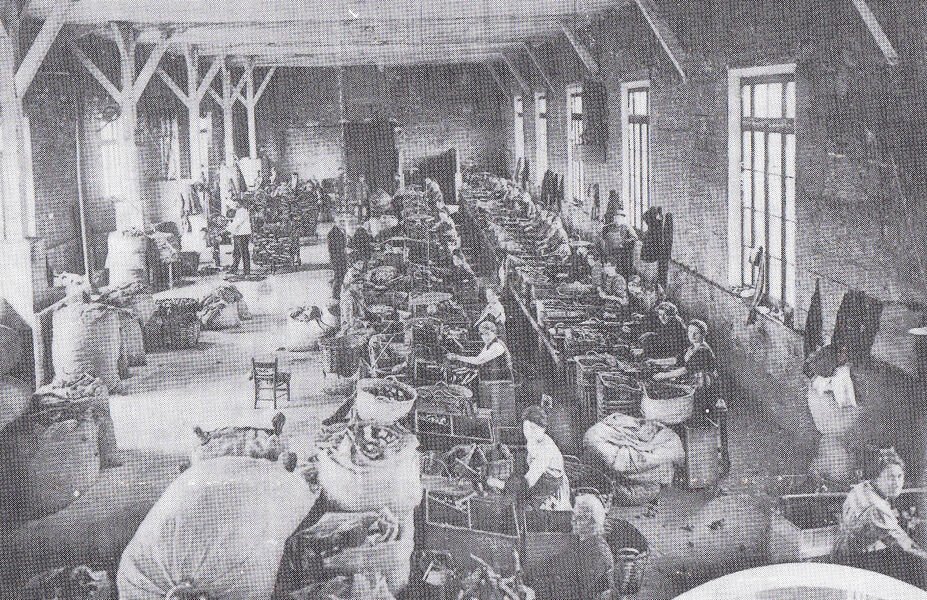
The largest of these factories, situated in the Barri district, was relocated at the start of the 20th century to what is now Avenue des Poilus. The business expanded considerably there: nearly a hundred employees worked there, producing between 60 and 80 million bottle stoppers each year.
But the history of cork production is also marked by tragic events. In 1950, a violent fire ravaged the buildings and industrial facilities, destroying nearly three-quarters of the site as well as the entire stock of cork, estimated at 4 million tonnes.
On top of these difficulties, foreign competition gradually began to mount. From the end of the 19th century, production in the Iberian Peninsula expanded and, in the 1940s and 1950s, French cork factories faced increasingly fierce international competition.
The cork factory in Pierrefeu-du-Var finally ceased operations in 1971, bringing to an end more than a century of local industrial history.
Today, the former cork factory stands as a testament to the importance of the cork industry in the economic and social history of Pierrefeu-du-Var.
Now a venue dedicated to culture, it regularly hosts exhibitions and cultural events at the Espace Bouchonnerie – Salle André Malraux.
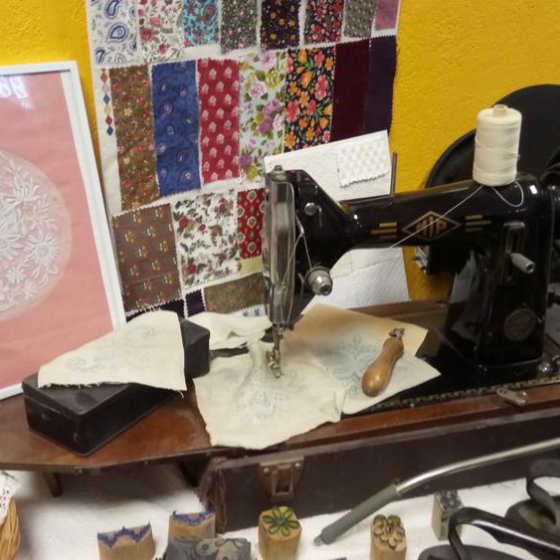
At the entrance to the Espace Bouchonnerie is also the Maison des Arts et Traditions Provençales, home to the Leï Roucas dou Barri association. This association keeps alive the tradition of Marseillais piqué, more commonly known as boutis, a traditional Provençal textile craft.
Throughout the year, the association helps to keep this artisanal heritage alive and introduce people to it. In particular, it organises the annual Rencontres du Boutis, an event that brings together enthusiasts, creators and visitors to celebrate this traditional art form, at the heart of the Espace Bouchonnerie.
The largest of these factories, situated in the Barri district, was relocated at the start of the 20th century to what is now Avenue des Poilus. The business expanded considerably there: nearly a hundred employees worked there, producing between 60 and 80 million bottle stoppers each year.
But the history of cork production is also marked by tragic events. In 1950, a violent fire ravaged the buildings and industrial facilities, destroying nearly three-quarters of the site as well as the entire stock of cork, estimated at 4 million tonnes.
On top of these difficulties, foreign competition gradually began to mount. From the end of the 19th century, production in the Iberian Peninsula expanded and, in the 1940s and 1950s, French cork factories faced increasingly fierce international competition.
The cork factory in Pierrefeu-du-Var finally ceased operations in 1971, bringing to an end more than a century of local industrial history.
Today, the former cork factory stands as a testament to the importance of the cork industry in the economic and social history of Pierrefeu-du-Var.
Now a venue dedicated to culture, it regularly hosts exhibitions and cultural events at the Espace Bouchonnerie – Salle André Malraux.
At the entrance to the Espace Bouchonnerie is also the Maison des Arts et Traditions Provençales, home to the Leï Roucas dou Barri association. This association keeps alive the tradition of Marseillais piqué, more commonly known as boutis, a traditional Provençal textile craft.
Throughout the year, the association helps to keep this artisanal heritage alive and introduce people to it. In particular, it organises the annual Rencontres du Boutis, an event that brings together enthusiasts, creators and visitors to celebrate this traditional art form, at the heart of the Espace Bouchonnerie.